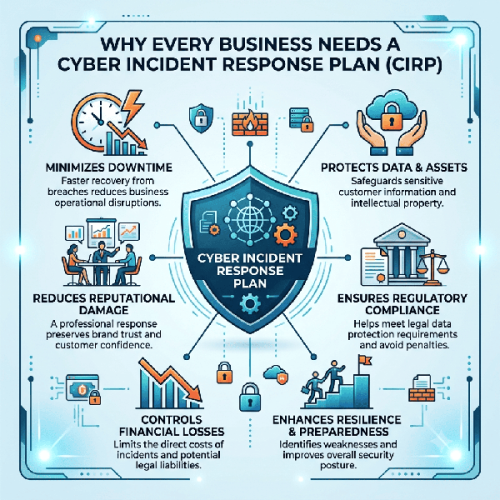
A Cyber Incident Response Plan (CIRP) is a structured, written strategy that outlines how an organization detects, responds to, and recovers from a cybersecurity breach. Leaving response strategies to the moment an attack occurs leads to panic, delayed action, and severe financial losses.
1. Minimizes Financial and Operational Damage Ransomware and data breaches cause immediate downtime. A predefined plan establishes clear operational workflows, allowing IT and security teams to isolate infected systems, halt the spread of malware, and restore backups quickly. This dramatically reduces costly operational paralysis.
2. Ensures Legal and Regulatory Compliance Data privacy frameworks—such as GDPR, HIPAA, and regional data protection laws—mandate strict timelines for reporting data breaches (often within 72 hours). A CIRP includes explicit compliance protocols, ensuring legal teams, privacy officers, and regulatory bodies are notified on schedule to avoid catastrophic fines.
3. Protects Brand Reputation and Customer Trust How a company handles a crisis defines its public perception. Delayed, contradictory, or dishonest communication during a breach destroys customer trust. A CIRP assigns designated spokespeople and prepares pre-approved communication templates for customers, stakeholders, and the press.
4. Eliminates Chaos with Clear Roles and Responsibilities During an active security incident, confusion slows down mitigation. A CIRP defines a dedicated Incident Response Team (IRT) with explicit roles, establishing who makes critical decisions, such as taking core servers offline or engaging law enforcement.
5. Strengthens Cyber Insurance Eligibility Most cyber insurance providers require proof of an active, regularly tested incident response plan before issuing or renewing coverage. Without one, claims may be denied or premiums may become prohibitively expensive.
Key Components of an Effective Response Plan
-
Preparation: Inventorying critical assets, setting up monitoring tools, and conducting mock tabletop drills.
-
Detection & Analysis: Identifying suspicious activity, determining the scope of the breach, and triaging threats.
-
Containment: Taking affected systems offline to stop the attack from spreading across the network.
-
Eradication & Recovery: Eliminating the root cause (e.g., malware, compromised credentials) and restoring systems from secure backups.
-
Post-Incident Review: Conducting a post-mortem to analyze what happened, update security controls, and prevent future occurrences.

krishna
Krishna is an experienced B2B blogger specializing in creating insightful and engaging content for businesses. With a keen understanding of industry trends and a talent for translating complex concepts into relatable narratives, Krishna helps companies build their brand, connect with their audience, and drive growth through compelling storytelling and strategic communication.